Graduate School of Medical Sciences
A partnership with the Sloan Kettering Institute

News

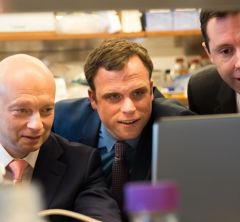
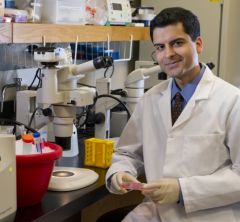
Graduating computational modeling students Neel Madhukar and Katie Gayvert, both members of the Elemento Lab, featured in a recent WCM video highlighting the accomplishments of their collaborative and individual efforts to better science and biomedical research. Both students were featured in Forbes 2016 30 under 30 under Healthcare.

Watch the video here.

Read More

Dear Weill Cornell Medicine Community,

I am writing to inform you of several exciting leadership appointments at Weill Cornell Medicine that will keep us at the forefront of biomedical graduate education and research.

Dr. Gary Koretzky

Read More

NEW YORK (April 28, 2017) – Weill Cornell Medicine today announced a gift made by WorldQuant, LLC (“WorldQuant”)  and Igor Tulchinsky that will further realize the promise of precision medicine. The $5 million gift establishes a new initiative that will use predictive tools to enhance Weill Cornell Medicine’s capability to diagnose and treat a variety of illnesses, with the goal of improving outcomes for patients.

The WorldQuant Initiative for Quantitative Prediction brings together...

Read More

Dear Weill Cornell Medicine Community,

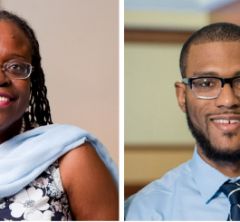
I am pleased to announce the creation of two new leadership positions to support our students and enhance our climate of diversity.  Dr. Elizabeth Wilson-Anstey and Dr. Marcus Lambert have both been appointed to the role of assistant dean of diversity and student life.  Together they will lead a revitalized effort to ensure that the needs of our diverse medical and graduate student populations are met.

Diversity is one of Weill Cornell...

Read More

Milka Doktorova realized early into her PhD research that she might need to work in two different labs, hundreds of miles apart. It was the only way she could validate simulations and examine in atomic detail the way our cell membranes function – information that could ultimately lead to developing effective medications. Until now, most studies on how medications affect membrane barriers and the proteins that live in them have been performed with artificial symmetric membranes, even though...

Read More

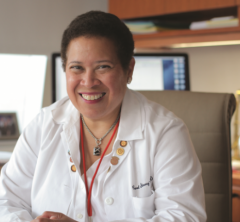
Dr. Carol Storey-Johnson, senior advisor for medical education and a professor of medicine at Weill Cornell Medicine, has won the 2017 Distinguished Educator Award from the Northeast Group on Educational Affairs (NEGEA).

The NEGEA is a regional group of the Association of American Medical Colleges’ Group on Educational Affairs, tasked with promoting excellence in education through the collegial exchange of ideas and professional development programs. The Distinguished Educator Award...

Read More

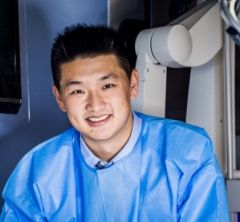
As an undergraduate student, Du Cheng invented a laboratory camera adapter that allowed scientists to capture images with an iPhone and view them through a microscope. Although he figured out how to manufacture his technology, Cheng, a fourth-year M.D.-Ph.D. student at Weill Cornell Medicine, needed help turning his product into a viable business.

Read More

Wan-Ying Hsieh’s research on glioblastoma, an aggressive and difficult-to-treat type of brain tumor, has yielded compelling results. A fifth-year student in the Weill Cornell Medicine Graduate School of Medical Sciences in the lab of Dr. Ingo Mellinghoff at Memorial Sloan Kettering Cancer Center, Hsieh has added another piece to the puzzle of how the oncogenic epidermal growth factor receptor (EGFR) is regulated in normal and cancerous cells, expanding the emerging picture of its activity...

Read More

MD-PhD student Kevin O'Rourke is included on the list of "30 under 30 List- Healthcare". Kevin is a student in Dr. Scott Lowe's lab.

Read below for Kevin's feature:

[Kevin] O'Rourke focuses on understanding and studying colorectal cancer, one of the most common forms of the disease. His 2015 paper in Cell showed that, at least in mice, a gene called APC caused colon cancer. The mice were cured even when other cancer-causing genes were turned on if APC was off. Memorial Sloan...

Read More

An internal code in cellular molecules called messenger RNA predetermines how much protein they will produce, scientists from Weill Cornell Medicine discovered in a new study. The findings may settle a fundamental question in molecular biology — how the amount of protein generated from a messenger RNA is determined — and could help scientists develop new therapies for diseases such as cancer, where abnormal amounts of protein accumulate.

“This is one of the biggest questions...

Read More

Weill Cornell Medicine Graduate School of Medical Sciences 1300 York Ave. Box 65 New York, NY 10065 Phone: (212) 746-6565 Fax: (212) 746-8906